Heavy construction equipment in Chișinău and across Moldova
Each machine comes with its operator and the tipper with its driver. Before we come, we talk about the gate, the ground in the yard and the lane.
Call nowDescribe the way in as you see it from the street, and we give you the price on the same call.

Each machine gets in its own way
Where the backhoe loader gets in easily, the low loader may not fit and a full tipper may sink. So we ask about access for each machine separately. Each one comes with one of our people.
-
The low loader
It brings the excavator, the backhoe loader or the roller as far as your lane and usually stays there. The machine drives into the yard on its own. First it has to cross the culvert over the ditch at the gate, which takes its full weight.
What to tell us
Where it can stop in your street, and what the culvert is made of: concrete, a pipe under soil or planks.
-
The excavator
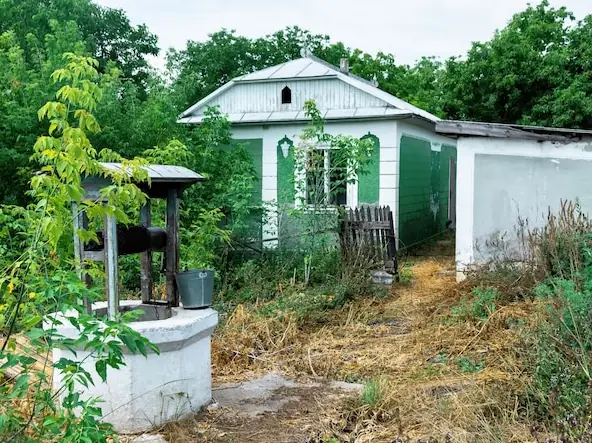
It runs on tracks and turns on the spot, so it needs little room in the yard. In a village yard what gets in its way is usually overhead: a vine pergola, the walnut by the gate, the wires to the house.
What to tell us
How low the pergola or the lowest branch on its way hangs, and where the wires to the house run.
-
The backhoe loader
It runs on wheels with a bucket at the front and an arm at the back, so it is long. It goes through a gate straight on, and to turn round it needs a clear yard without cars or heaps.
What to tell us
The width of the gate between the posts, and whether the gate leaves lift off their hinges.
-
The roller
Its steel drum is heavy and smooth. On new paving or fresh tarmac it can leave marks where it turns. On wet clay on a slope it slides.
What to tell us
What it crosses on the way to the work: paving, a path or a slope.
-
The tipper
It backs into the yard. With its body raised it stands far taller than on the road. Loaded with up to 20 tonnes on four axles, it presses on the ground harder than any other machine of ours.
What to tell us
Where it tips or gets loaded, and what hangs over that spot.
How much weight the yard will take
A yard that takes people and a car may still give way under a loaded tipper, especially if it crosses the same spot several times. So we judge the ground by the heaviest machine that will cross it.
Full on the way out
The tipper comes in empty and leaves full. It is best loaded on the firm part of the yard, near the gate, rather than at the back of the plot.
Fresh backfill
Soil put back into a trench or around foundations is still loose and sinks under wheels. Show us where a pipe or cable went in this year, and the machines keep to one side of it.
Cellar and well
At village houses the cellar vault often runs under the yard, and an old filled-in well is easily forgotten. Tell us about them, even if grass has long covered them.
Slopes
On a sloping plot the machines go straight up and down rather than across. Tell us whether the gate is above or below where the work is.
Stone at the gate
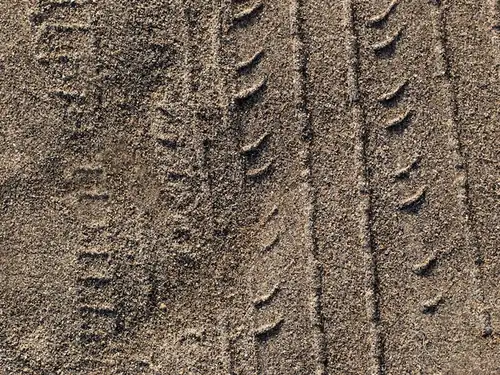
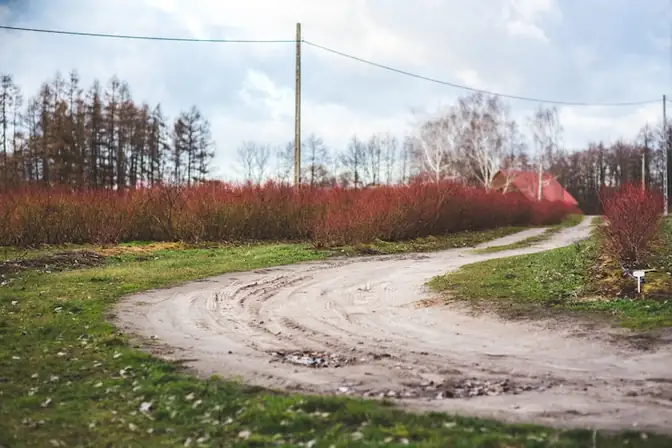
If the way in is clay, a few loads of quarry stone or crushed stone, rolled flat, turn it into a good road for the whole build. Our machines, the concrete mixer truck and the deliveries all use it. We sell the stone and bring it in our tipper.
How the machines leave at the end
When we arrive, the yard is empty. When we leave, it already has a pit, heaps and perhaps fresh foundations. So we plan the way back to the gate from the start.
Digging from the far end
The excavator starts on the side furthest from the gate and works back towards it, so the pit never ends up between the machine and the way out.
A clear strip
From the gate to the work, a strip stays free of heaps, bricks and steel bars. The machines leave along it, and so does the loaded tipper.
When a machine comes back
If the backhoe loader comes back to backfill once the foundations are poured, its way in must still be clear. Keep scaffolding and pallets of blocks out of its path.
The street afterwards
Off wet clay, tracks and wheels carry soil out onto the road. Stone at the gate keeps most of it in the yard. The rest is best swept off the tarmac the same evening.
From the sectors of Chișinău to Moldova’s villages
In town and in a village we ask the same thing: where the machine gets in and where it gets out. In a village the lane and the culvert at the gate count too.
- In Chișinău
- Botanica, Buiucani, Centru, Ciocana, Râșcani.
- Across Moldova
- We take the machines to any town or village in Moldova, from Pelinia in the north to Lozova in the Codri hills and from Cărpineni to Sadaclia in the south.
Questions about getting heavy equipment onto your plot
How is the price of heavy construction equipment worked out?
It depends on which machines you need, how long they stay and how far the plot is. We tell you the price on the phone once we know the job and the village or sector.
What if the machine won’t fit through the gate?
Then we look for another way in. A section of fence can come down and go back afterwards, or we can come through the neighbour’s yard if they agree. For a dig right by the fence, the excavator can work with its arm from the street.
There’s a vine pergola over my gate. Does it have to come down?
Not necessarily. Tell us roughly how high it is. Usually the excavator passes under it with its arm lowered, and the tipper raises its body only in the open.
What should I do in the yard before the day of the work?
Open the gate fully or lift the leaves off, and move the cars out of the yard. Clear any heaps from the way to the work. Mark the cellar, the well and any manhole covers with a stake.
What should the entrance to a plot be made of so vehicles don’t sink?
Usually a thick layer of quarry stone goes below to take the weight, with crushed stone or crushed granite on top so the wheels don’t scatter it. We have all of it. We bring it in our tipper and compact it with the roller.
Our lane is a dead end. Can the low loader get in?
Tell us straight away. The low loader then backs into the lane or unloads where it begins, and the machine drives the rest of the way.
Do the machines go out to villages in other districts?
Yes, to any district, from Pelinia to Sadaclia. For a village plot, tell us about the last lane to your gate too: tarmac, gravel or clay.
Got a plot the machines need to get onto? Tell us the way from the street to the work.
Tell us the village or sector, the job and what you see on the way: the gate, what hangs over it and what lies underground. From that we choose the machines and where they get in.
Call now